Chempolis Ltd. works with sustainable lignocellulosic feedstocks, particularly utilizing responsibly cultivated non-wood, non-food raw materials as well as industrial side streams. Process development is based on experimental work, especially at laboratory and pilot scale, supported by process modelling and, above all, practical observations, which are essential when moving toward industrial scale.
At the Oulu pilot plant, lignin processes are continuously developed and validated for industrial applications. Lignin production is one of the most important operations at the pilot facility, and the successful demonstration of separation, washing, and drying requires reliable filtration technology.
Since 2022, a fully automated Roxia Smart Filter Press (SFP) has been supporting the development of lignin production at pilot scale. In addition to process development, the filter also enables customer process validation before transitioning to full-scale investments.
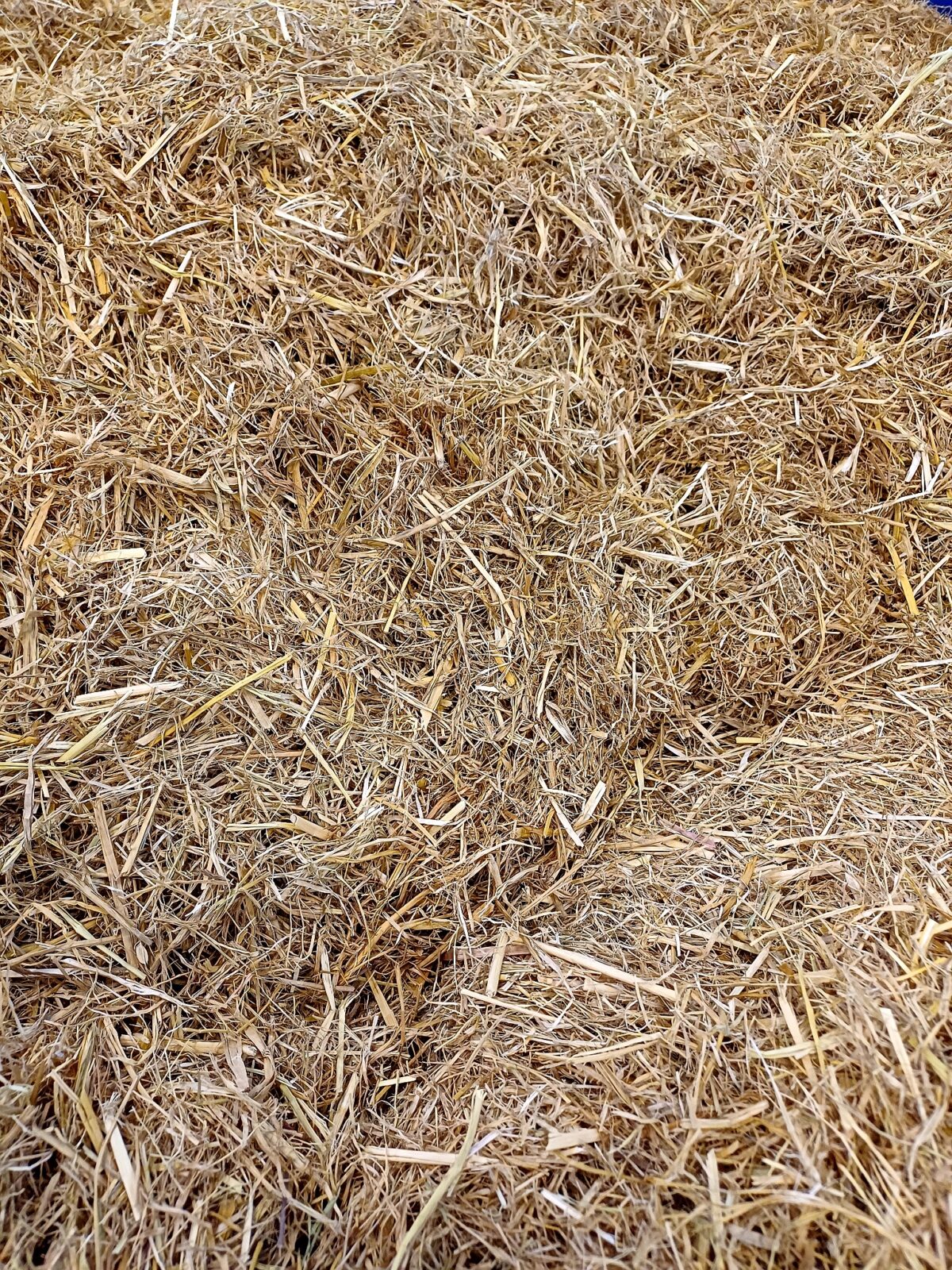
Fast Commissioning Ensured a Smooth Start to the Collaboration
Commissioning the unit was straightforward.
“This is one of the few equipment packages in our history where commissioning worked perfectly on the first attempt,” says Keijo Hytönen, Director of the Oulu pilot plant at Chempolis.
The unit was quickly brought into operation, and personnel adopted its use effortlessly.
“It was surprisingly easy to take into use, and the staff learned to operate it quickly. Even employees who use the equipment less frequently can operate the filter without extensive training,” Keijo notes.
Personnel have also been satisfied with the unit’s automatic operation, especially the automatic cake discharge system.
The filter has operated reliably over several years of use. At Chempolis, the key filtration factors are ease of operation, high dry solids content, and washing efficiency. The Roxia SFP has performed consistently with all lignin qualities and has supported the development of lignin quality.
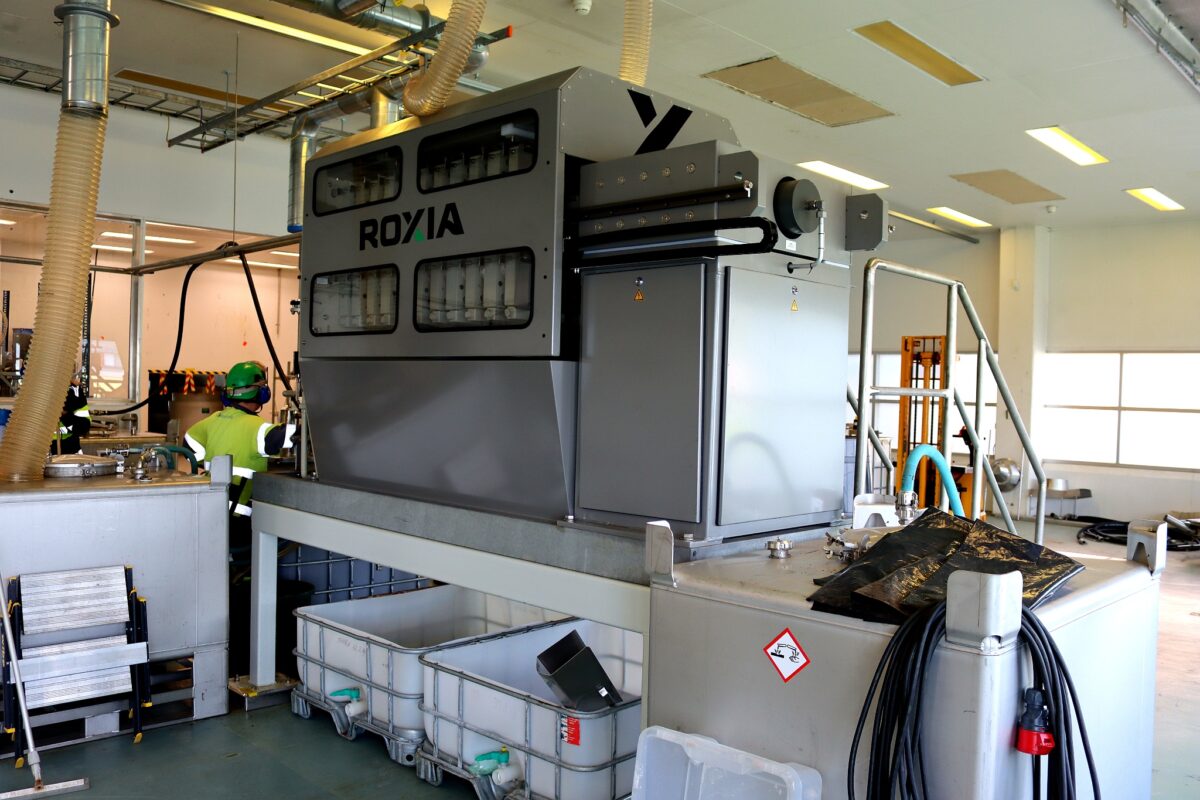
Increased Capacity Enables Larger Customer Samples
For Chempolis, one of the most important requirements is the ability to produce sufficient volumes of lignin for customers. Before the introduction of the Roxia SFP, the pilot plant relied on rented equipment.
The new solution enabled significantly larger sample volumes, improved throughput and efficiency, increased production capacity, and independence from external services.
“Without this equipment, we would not be able to produce the required sample quantities as demand continues to grow,” says Keijo.
In practice, customer projects often require the production of lignin batches of up to several hundred kilograms, which requires this type of equipment.
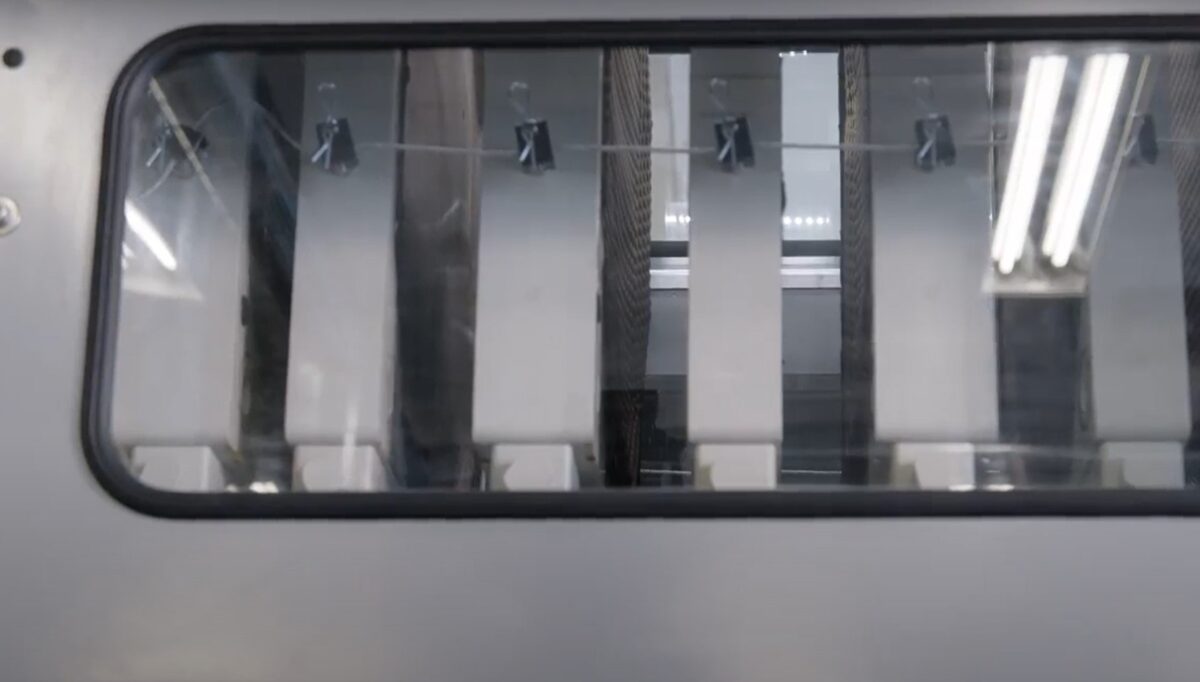
Visible Results for Customer Projects and Decision-making Support
Data alone is often not sufficient in a pilot plant environment. Customers want to see lignin filtration in practice. In many cases, filtration has supported the progress of project initiatives. Observations and data obtained from piloting also support the design of future plants.
At Chempolis, the Roxia SFP enables:
- demonstration of lignin separation under conditions corresponding to industrial implementation
- delivery of concrete samples to customers in the required quality and quantities
- support for decision-making in concept development and engineering
- evaluation of process scalability
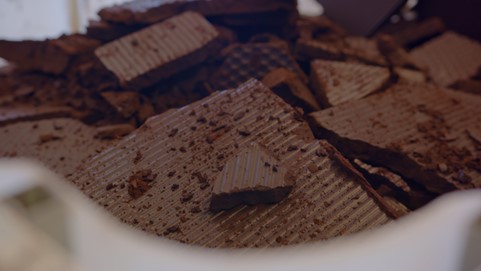
Reliable Equipment and Long-term Partnership Supporting Plant Design
The maintenance requirements of the unit have been minimal, and no major repairs have been needed. Maintenance is mainly limited to standard cleaning and washing, and spare parts have hardly been required.
“The unit has operated without significant delays. Any delays have come more from other parts of the process,” Keijo states.
Based on their experience, Chempolis sees Roxia as a strong partner going forward.
“We would choose Roxia as a supplier again and include them also in larger-scale projects. Based on our own experience, we can only recommend both the solution and the supplier. It is difficult to come up with anything negative,” Keijo concludes.
Cooperation with Roxia has proven effective, and piloting with the SFP filter supports the design of future plants and the scaling of processes.
Are you interested to read more about lignin filtration? Read also this article: Filter Press for Lignin Production