Anodizing is a metal surface treatment process where aluminum parts are immersed in
process tanks to form a durable oxide layer. The process typically includes degreasing,
etching, anodizing, and sealing steps in a series of dip tanks. During operation,
contaminants such as oils, dissolved aluminum, and suspended solids are continuously
transferred between tanks due to drag-out. In addition, wastewater streams are
generated that require proper treatment before discharge.
Common Contaminants in Anodizing Processes:
- Oils from degreasing stages (carry-over
contamination) - Aluminum hydroxide (Al(OH)₃) and suspended
solids - Dissolved aluminum (Al³⁺)
- Acids (e.g. sulfuric acid, nitric acid)
- Alkalis (NaOH from etching)
- Additives and process residues
These contaminants can impact coating quality,
increase chemical consumption, and cause instability in
anodizing lines if not properly controlled.
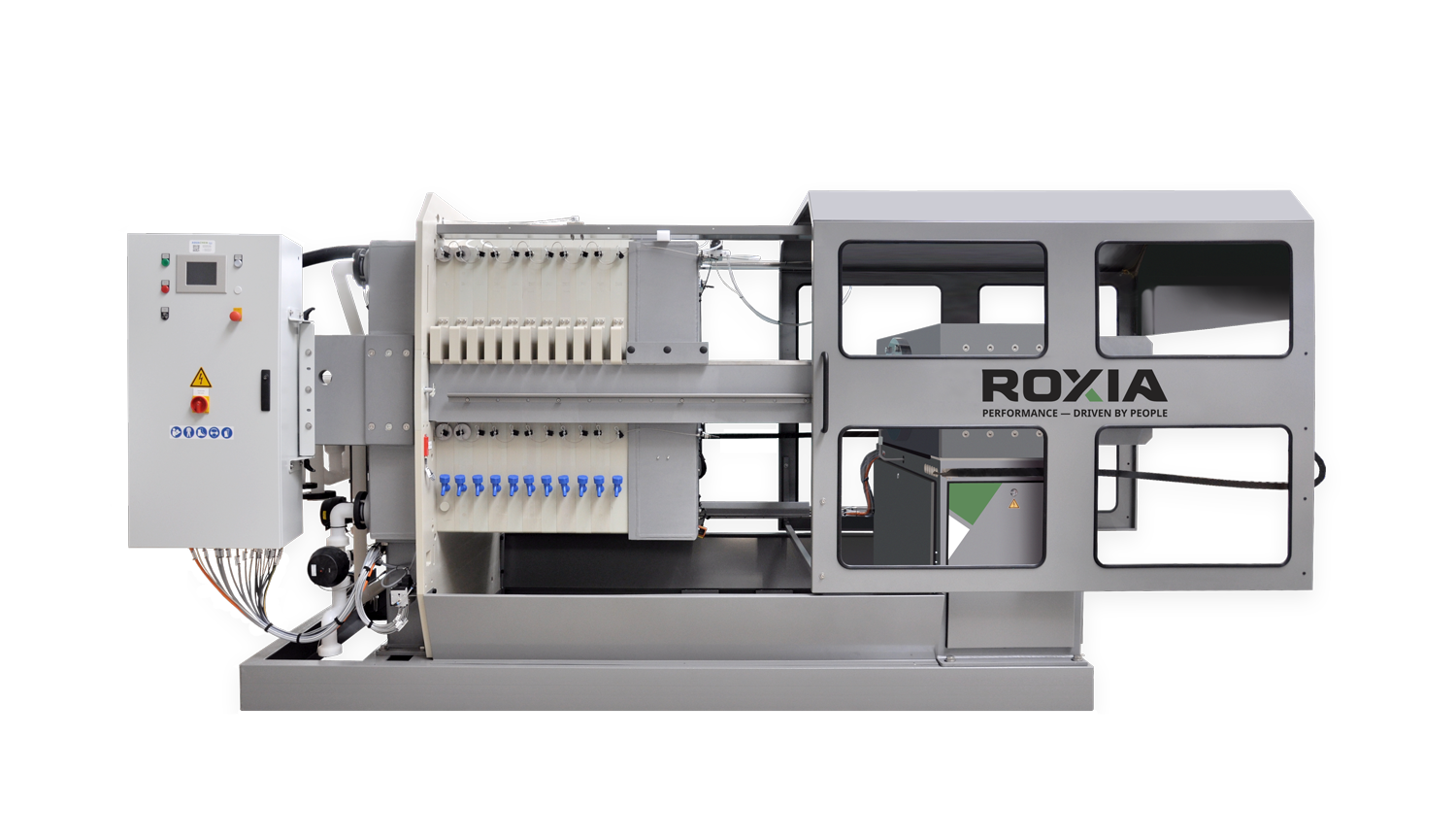
How Roxia SFP Serves in Anodizing Processes
Roxia Smart Filter Press (SFP) removes suspended
solids and aluminum hydroxide from both process
side streams (such as etching baths) and wastewater
treatment. This improves process stability, extends
bath lifetime, and reduces waste volumes.
Key Benefits of Roxia Smart Filter Press
- Efficient removal of aluminum hydroxide and
suspended solids - Extended lifetime of etching and process baths
- Improved surface quality and reduced defects
- Dry filter cake for easy and safe disposal
Reduced chemical consumption - Compact and modular design: Easy integration
into existing lines - Cost-effective: Reduces downtime and
maintenance